
IPL PhotoFacial in Fort Mill, SC: What It Treats, What to Expect, and Why Fall Is a Great Time to Start
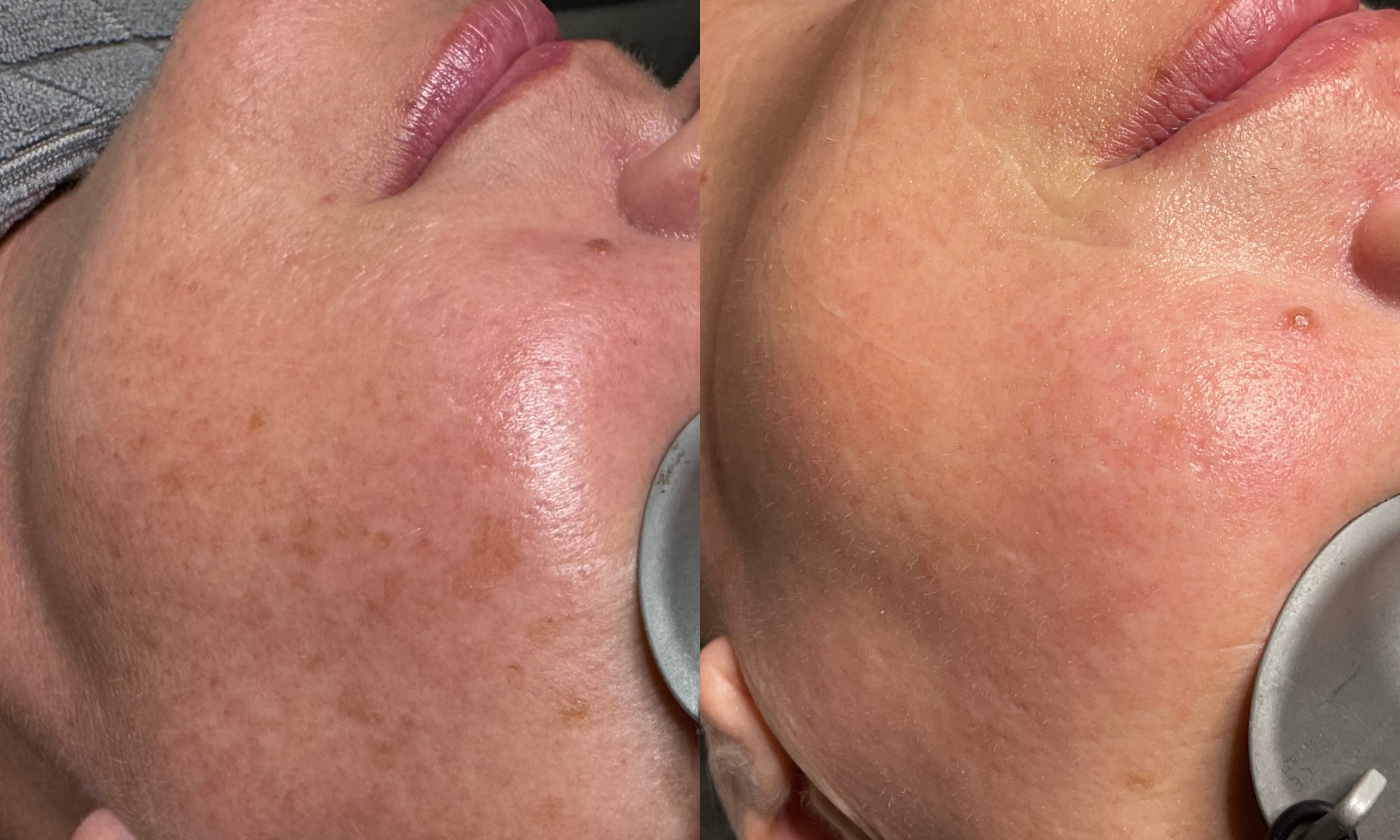
You notice it in a photo before you notice it in the mirror.
A brown patch near your cheekbone that wasn't there a few summers ago. A flush across your nose and chin that shows up even when you haven't been in the sun at all.
Years of Carolina summers, lake days, and sitting on the sideline at your kid's soccer games leave a record on your skin, whether you meant for them to or not.
If you're researching IPL PhotoFacial in Fort Mill, SC, you're probably trying to answer a few specific questions.
What does IPL treat? What is the recovery like? And is now, heading into fall, a smart time to start?
IPL PhotoFacial works by using broad-spectrum light to target the pigment and blood vessels sitting underneath your skin's surface, treating sun damage and redness at the source instead of just covering it up.
Here's what to expect, treatment by treatment, and why fall tends to be an easier season to begin.
What Is an IPL PhotoFacial, and What Does It Treat?
IPL stands for intense pulsed light.
Unlike a single-wavelength laser, IPL uses broad-spectrum light that can be tuned to target two very different things at once: the melanin that causes brown spots and the hemoglobin that causes visible redness.
The light heats and breaks down that pigment or those small blood vessels, and your body clears the debris naturally over the days and weeks that follow.
That's what makes IPL useful for such a wide range of concerns.
People come in for it to address:
Sun damage and sun spots from years of outdoor exposure
Brown spots and age spots on the face, chest, or hands
Visible redness, including the kind that comes and goes with flushing
Broken capillaries and small visible blood vessels
Uneven skin tone and blotchiness
General dullness that comes from years of unprotected sun exposure
It's not a treatment for deep wrinkles, volume loss, or acne scarring.
Those concerns call for different tools.
IPL's job is pigment and redness, and it does that job well when it's matched to the right skin type and the right concern.
What to Expect Before, During, and After Treatment
Every IPL treatment at New South starts with a conversation, not a device.
Your provider will look at your skin, ask about your sun exposure history, your skin tone, and what's bothering you most, and use that to decide whether IPL is the right fit and how the settings should be adjusted for you specifically.
During treatment, a cooling gel is applied and the device is passed over the treatment area in short pulses.
Most people describe the sensation as a quick snap, similar to a rubber band against the skin.
It's brief, and most patients tolerate it well without numbing.
Afterward, your skin will likely look and feel a bit like a mild sunburn for a day or two.
That's expected.
Brown spots often look darker immediately after treatment before they gradually flake off over the following one to two weeks, which is a normal part of the pigment clearing out.
Redness from broken capillaries tends to fade more gradually over several days.
Aftercare Basics
Aftercare is where results are made or lost.
Sun protection is non-negotiable both before and after treatment, since IPL targets pigment and unprotected sun exposure can undo the progress you just paid for.
Your provider will walk you through a simple plan: broad-spectrum SPF daily, gentle skincare while your skin recovers, and avoiding heat, harsh exfoliants, or intense exercise for a short window immediately after treatment.
Following those instructions closely is what separates a good result from a frustrating one.
How Many IPL Treatments Will You Need?
This is one of the most common questions we hear, and the honest answer is: it depends.
IPL tends to work gradually, with visible improvement building session over session rather than disappearing in one visit.
Some patients see meaningful change from a single treatment, especially for isolated concerns.
Others, particularly those addressing years of cumulative sun damage or more stubborn redness, get better, longer-lasting results from a series of treatments spaced a few weeks apart.
New South offers IPL as a treatment series of three spaced a month apart.
Which one makes sense for you comes down to your skin, your specific concerns, and your goals.
That's a conversation to have during your consultation, not a guess you make on your own before you ever walk in.
Why Fall Is a Great Time to Start Your IPL Series
Because IPL targets pigment, sun exposure matters more than usual in the weeks before and after treatment.
Recent tanning, whether from the sun or a tanning bed, increases the amount of melanin in your skin, which can make treatment less predictable and increase the risk of complications like unwanted pigment changes.
That's part of why fall is a convenient season to begin.
As pool days and beach trips wind down and recreational sun exposure naturally decreases across Fort Mill and the greater Charlotte area, it becomes easier to protect your skin consistently before and after each session.
Starting now also means you can complete a series and see results well before summer sun exposure ramps back up.
To be clear, IPL isn't limited to fall.
It can be performed at other times of year when your provider confirms it's appropriate and you're committed to consistent sun protection.
Fall just tends to make that part easier.
Why a Personalized Assessment Matters
Not every skin tone or pigmentation type responds to IPL the same way, and that's exactly why New South doesn't hand out a generic treatment plan off a menu.
Candidacy depends on your skin tone, the type and depth of your pigmentation, your recent sun exposure, and what you're trying to achieve.
Every new MedSpa client starts with a Glimpse skin assessment, which captures high-resolution images of your skin and analyzes pigmentation, texture, and overall skin health.
That data, combined with a provider's clinical judgment, is what shapes your treatment plan, rather than a one-size-fits-all recommendation.
New South is also one of the only MedSpas in the Fort Mill area with a physician in-house, so if what's showing up on your skin is connected to something happening with your health or hormones, that gets looked at too.
You're not left to piece together your own answer, and you're never pushed toward a treatment that isn't right for you.
That's the point of starting with an assessment instead of a sales pitch.
Frequently Asked Questions
-
IPL PhotoFacial treats sun damage, brown spots, age spots, visible redness, broken capillaries, and uneven skin tone. It works by targeting pigment and small blood vessels beneath the skin's surface, which your body then clears naturally over the following weeks.
-
Most patients describe the sensation as a quick snap, similar to a rubber band against the skin. It's brief and generally well tolerated without numbing cream, though sensitivity varies from person to person.
-
Downtime is minimal. Your skin may look and feel mildly sunburned for a day or two, and treated brown spots often darken before flaking off over one to two weeks. Most people return to normal activities right away with proper sun protection.
-
It depends on your skin and your goals. Some concerns improve noticeably after one session, while others respond better to a series spaced a few weeks apart. Your provider will recommend a plan based on your assessment, not a standard number for everyone.
-
Fall tends to bring less recreational sun exposure, which makes it easier to follow the sun protection IPL requires before and after treatment. IPL can be done at other times of year too, as long as you're committed to consistent sun protection.
-
Candidacy depends on your skin tone, the type of pigmentation you're treating, and your recent sun exposure. The best way to know is a personalized assessment, which is where every New South MedSpa treatment plan starts.
The Bottom Line
That brown spot in the photo, or the redness that shows up whether or not you've been in the sun, isn't something you have to just live with or guess your way through with a treatment you found online.
IPL PhotoFacial gives your skin a way to address years of sun damage and redness at the source, and starting this fall gives you a practical, lower-exposure window to do it right.
The first step isn't picking a package. It's a real conversation about your skin, your history, and what you're trying to achieve. That's where we'd start with you too.
Ready to see what IPL can do for your skin? Book a complimentary consultation at New South Family Medicine & MedSpa in Fort Mill, SC.
Not ready to book? Start by seeing what IPL and our other skin treatments can address.
